
LLM Governance Explained
The Rules, Risks & Architecture Every PM Must Know

There is a new product layer emerging in AI teams.
It isn’t visible in UI mocks.
It isn’t inside Jira tickets.
It isn’t even written in most product strategy docs.
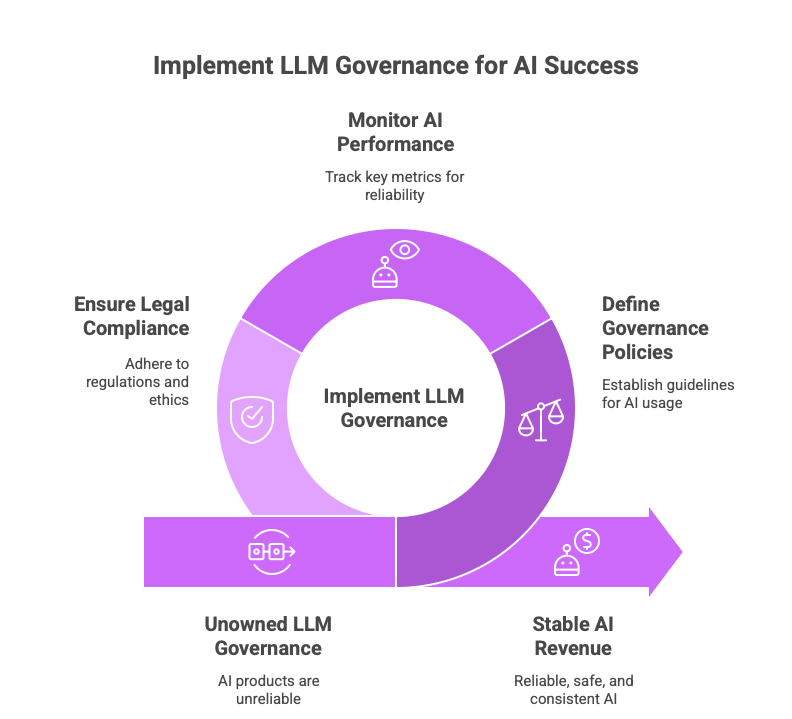
Yet it decides whether an AI product becomes:
a stable revenue engine
or a hallucinating liability.
That layer is LLM Governance.
And today, almost nobody talks about it.
PMs talk about prompts.
Engineers talk about pipelines.
Researchers talk about model sizes.
Founders talk about the next demo.
Meanwhile, the single most important layer needed to keep AI products reliable, safe, aligned, consistent, and legally defensible… sits unowned.
If 2024 was the year companies learned how to ship AI features,
2026 is the year companies learn how to govern them.
The Uncomfortable Truth: AI Doesn’t Stay the Same After Release
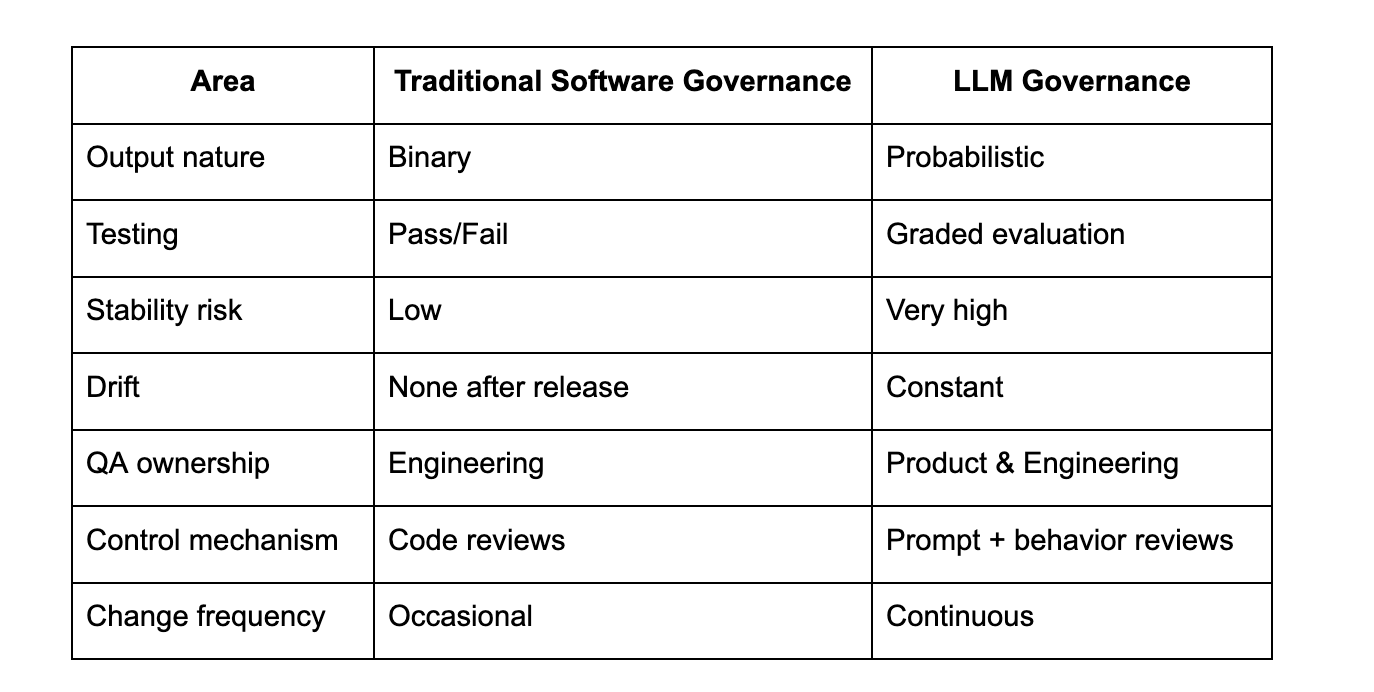
Traditional software stays still unless new code is deployed.
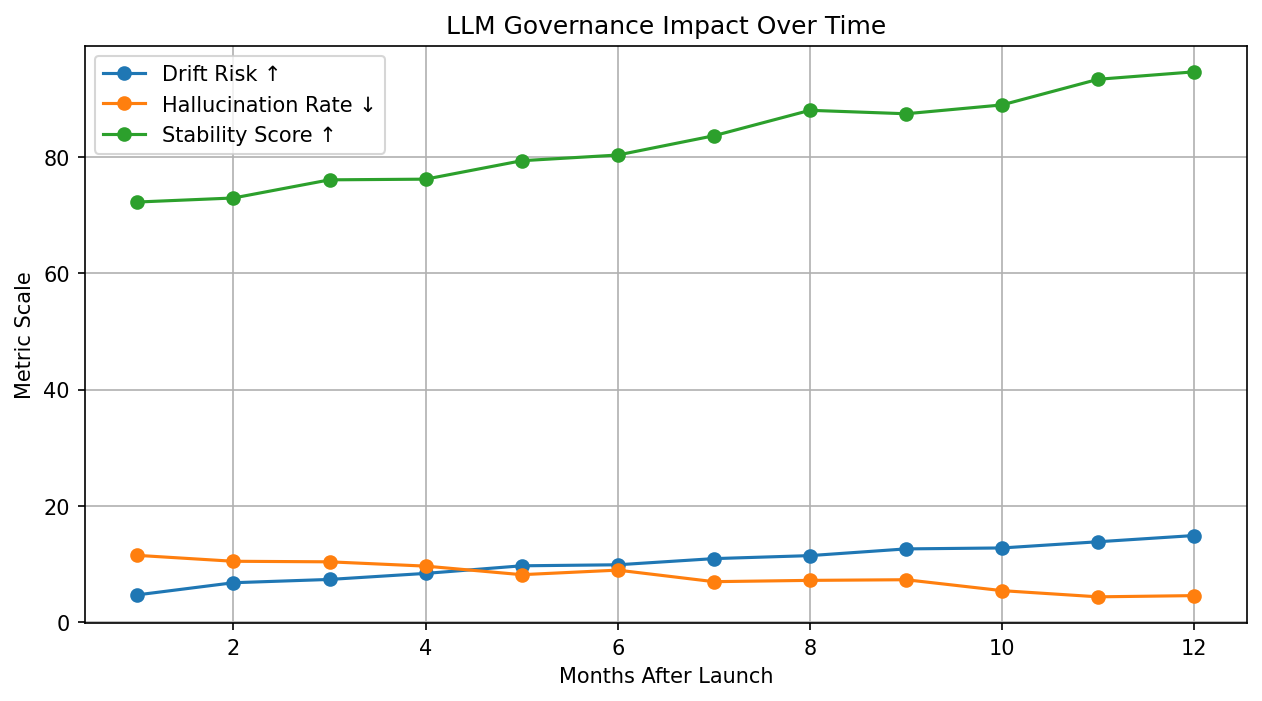
LLMs do not. They change simply by being used.
Why? Because they evolve through:
model parameter updates
temperature shifts
data expansion
context drift
prompt decay
hardware latency changes
vendor updates
new model versions
user domain variation
This is why governance matters.
What Is LLM Governance?
LLM Governance is the discipline of controlling, monitoring, auditing, stabilizing, and validating model behavior across its lifecycle.
It is how product teams ensure AI outputs stay:
accurate
consistent
safe
compliant
explainable
traceable
and scalable
Why PMs Must Care: AI Behavior Is Product
Outputs are not binary anymore.
LLM answers sit on a probability curve.
A PM who can’t measure behavior
cannot own product quality.
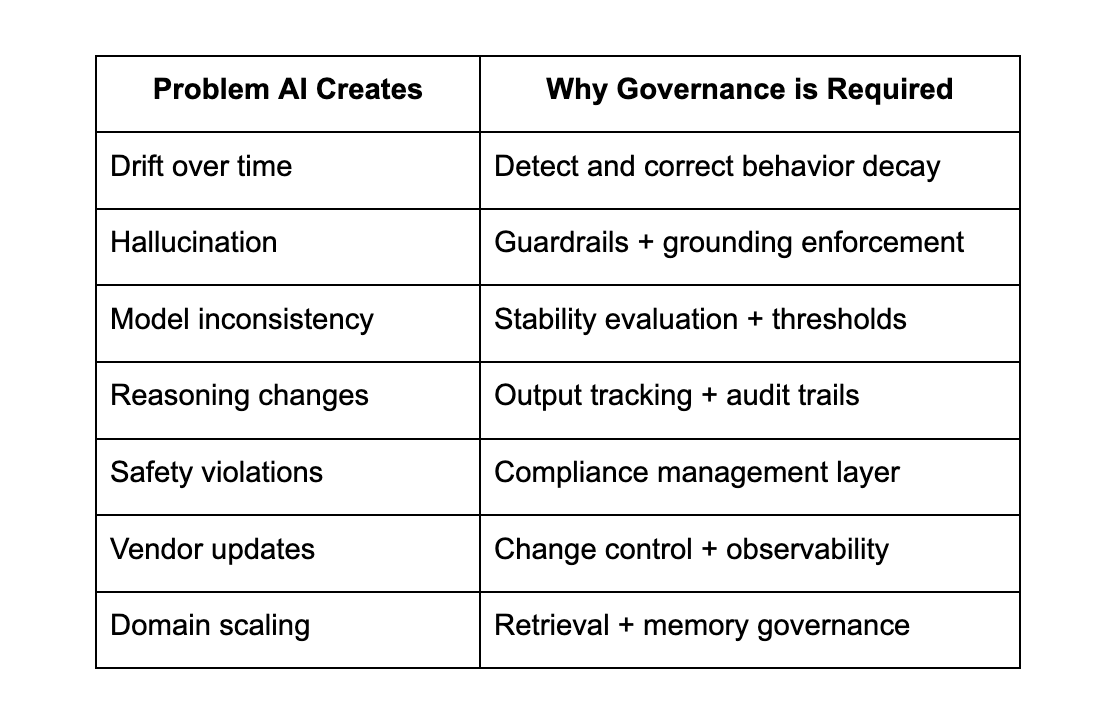
Why LLM Governance Exists
Why Governance Is the New Moat (Not Model Size)
The market myth:
“Bigger models = better product.”
Not true anymore.
Everyone uses the same LLM providers.
The differentiation layer becomes governance.
Two teams using the same model will produce different outcomes based on:
retrieval accuracy
evaluation design
prompt architecture
monitoring discipline
guardrail strength
audit control
Governance is where superiority compounds.
The Four Pillars of LLM Governance (PM Perspective)
1 Behavioral Stability
Ensuring outputs remain consistent across:
time
domains
model updates
user segments
traffic load
Stability = user trust.
2 Safety & Compliance
Prevent:
misinformation
IP misuse
bias
toxicity
illegal advice
confidential leakage
Compliance is shifting left - into product, not legal.
3 Observability & Drift Monitoring
Traditional software logs don’t detect reasoning drift.
Governance requires:
hallucination scoring
quality benchmarks
output metrics
latency & cost tracing
4 Auditability & Control
Outputs must be traceable:
What dataset?
Which knowledge source?
Who changed the prompt?
What version of the model?
Traceability is protection.
LLM Governance vs Traditional Governance
Why Traditional QA Cannot Govern AI
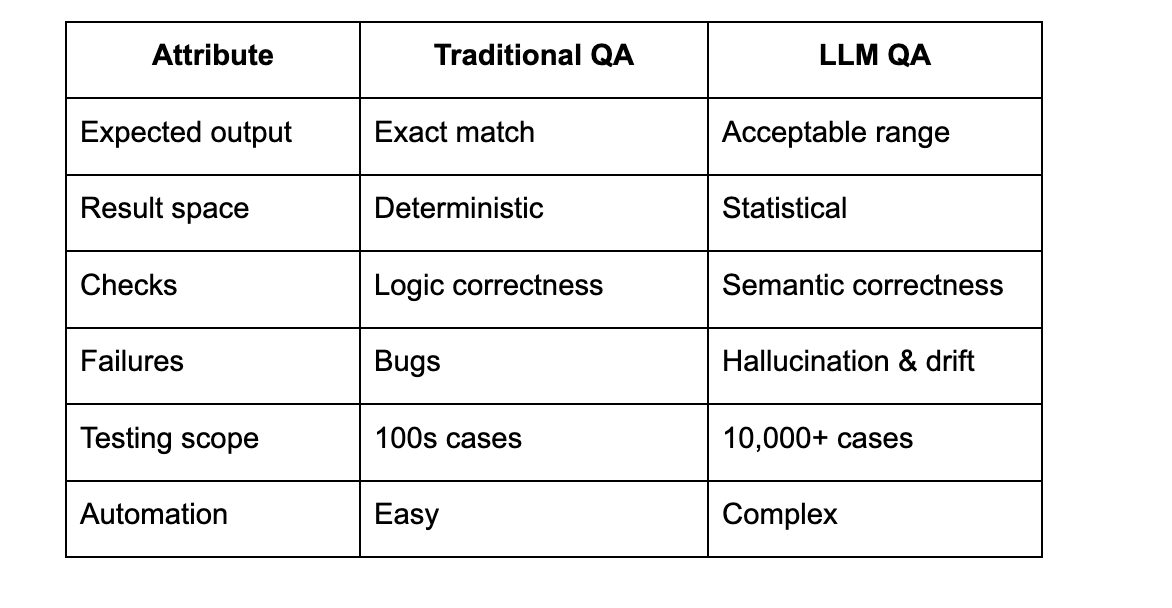
Standard QA checks binary outputs:
pass / fail.
LLM QA measures behavior change over time:
tone
structure
reasoning
hallucination
refusal pattern
Traditional QA vs LLM QA
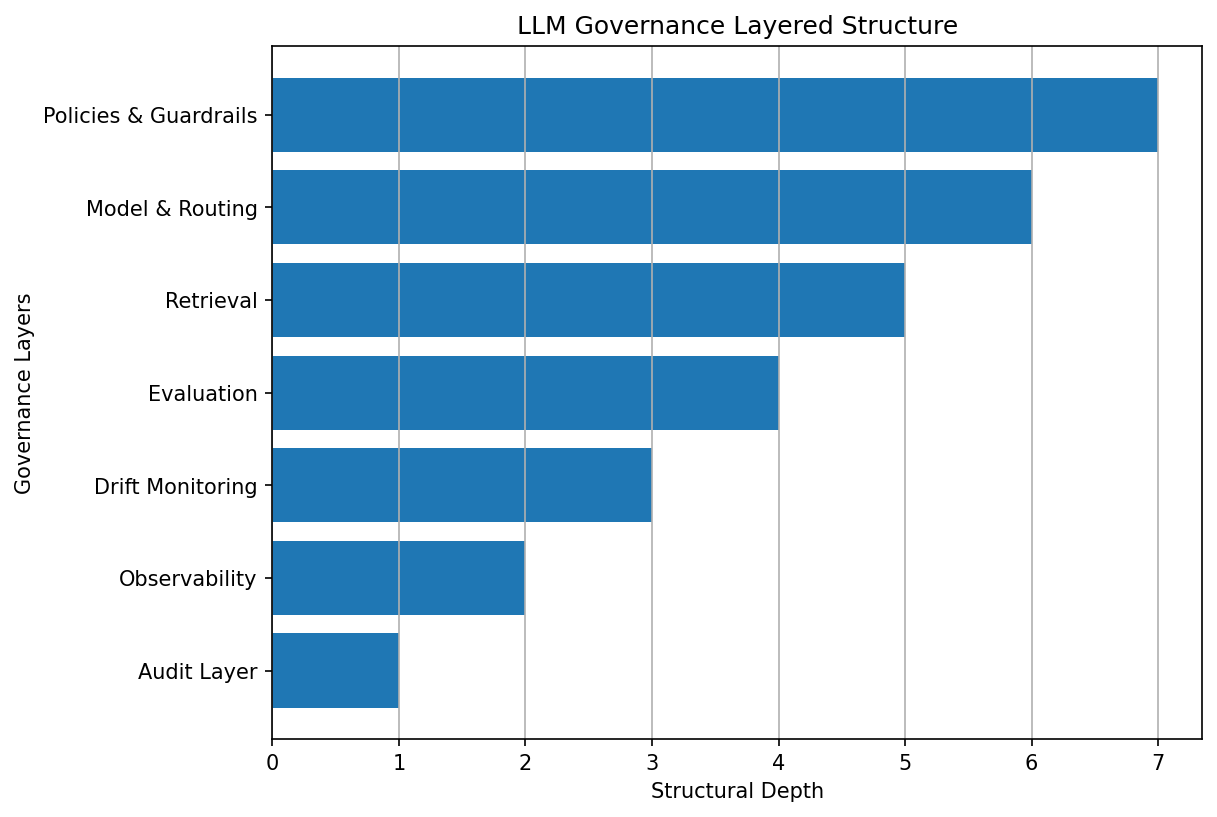
The Architecture of LLM Governance (Product Layer)
Users
↓
Policies (rules, safety, compliance)
↓
Guardrails (boundaries + filters)
↓
Prompt/Model Routing (selection logic)
↓
LLM (model execution)
↓
Retrieval Layer (grounding data)
↓
Evaluation Pipeline (scoring + grading)
↓
Drift Monitoring Layer (behavior tracking)
↓
Observability Layer (metrics + alerts)
↓
Audit Store (traceable logs)
This is the new stack PMs must design.
Why Drift Is the Silent AI Killer
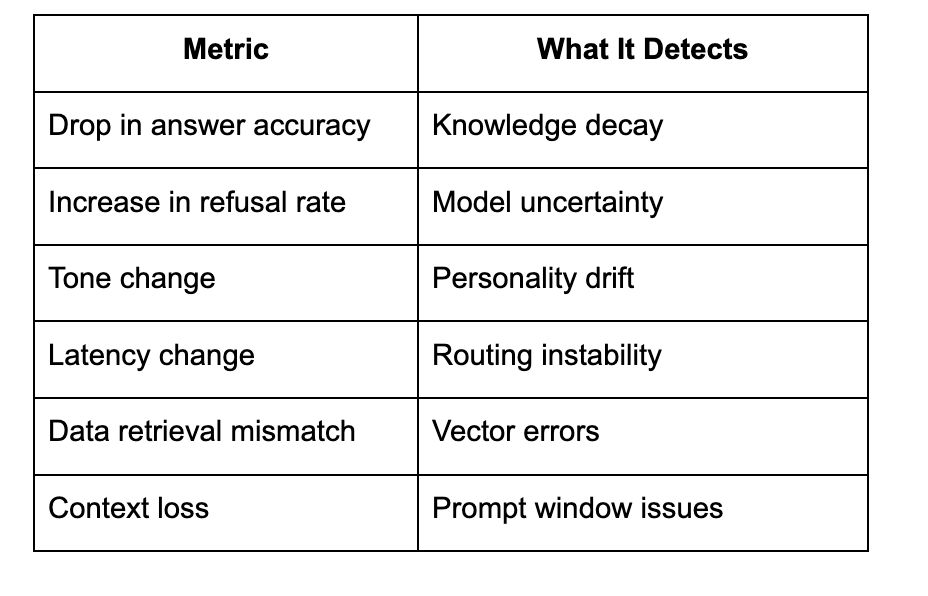
Drift is not a failure event.
It is a decay process.
Outputs worsen slowly until they collapse fast.
Drift Indicators to Monitor
Case Example: Governance Failure
A fintech deployed an LLM assistant to answer customer queries.
The pilot passed every test.
Six months later:
hallucination up 173%
tone changed
accuracy dropped
regulatory violations detected
Nothing changed in code.
Nothing changed in prompts.
Only behavior changed.
Why?
No governance.
No evaluation refresh.
No routing logic review.
No drift analysis.
No retrieval audit.
No safety renewal.
When governance is missing,
systems collapse quietly.
Why PMs Must Own Governance (Not Engineers)
Because PMs own:
quality
product outcome
customer experience
compliance risk
roadmap continuity
Governance isn’t low-level execution.
It is the product direction.
Hiring Will Shift Around Governance
Future AI PM interviews will ask:
“How would you monitor model drift?”
“What is an acceptable hallucination threshold?”
“How do you guarantee retrieval integrity?”
“What does guardrail testing look like?”
Governance is becoming the skill filter.
PM Responsibilities in LLM Governance
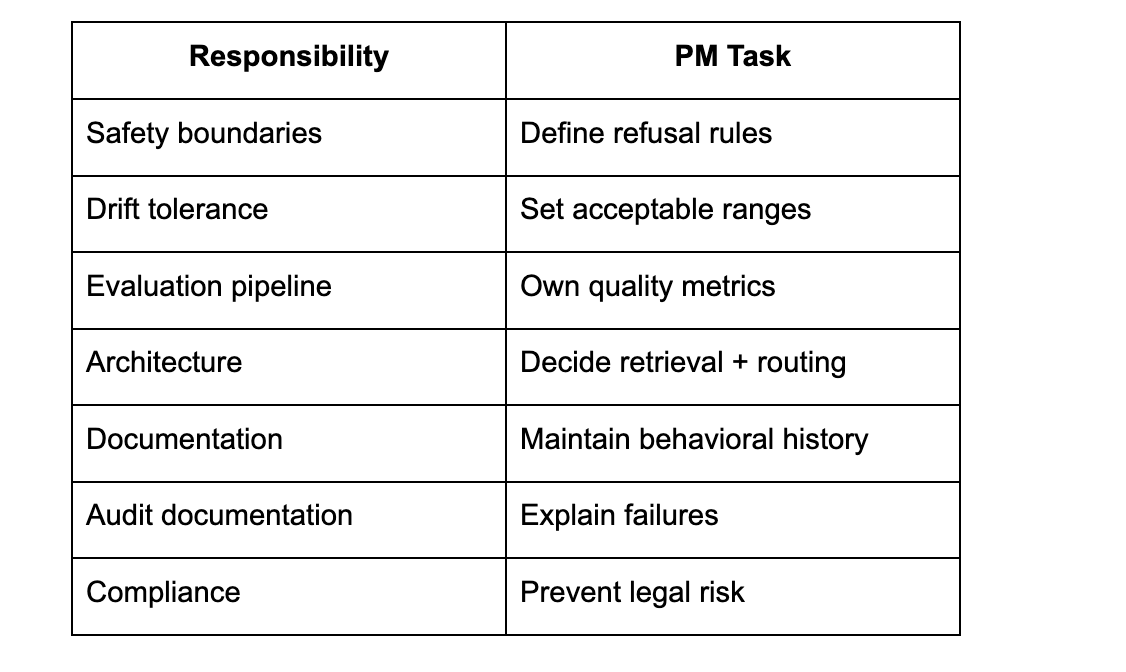
AI products don’t fail because models are bad.
They fail because behavior isn’t governed.
LLM governance isn’t optional:
It is the foundation layer of enterprise AI.
PMs who master this:
own architecture
control product risk
lead AI orgs
and shape the next era of software
Everyone else will build demos.
Governors will build companies.